From Leads to Loyal Customers: AI-Powered Marketing Funnels
The traditional marketing funnel is dead. Static campaigns, generic messaging, and one-size-fits-all nurture sequences can't compete with AI systems that personalize every touchpoint in real time. Here's the new playbook.
The Personalization Imperative
McKinsey data: companies that excel at personalization generate 40% more revenue than average players. The problem is that true personalization — individualized content, timing, channel, and message for each prospect — used to require an army of marketers.
AI changes that. A well-built AI marketing system can deliver meaningful personalization to 100,000 prospects as easily as to 100.
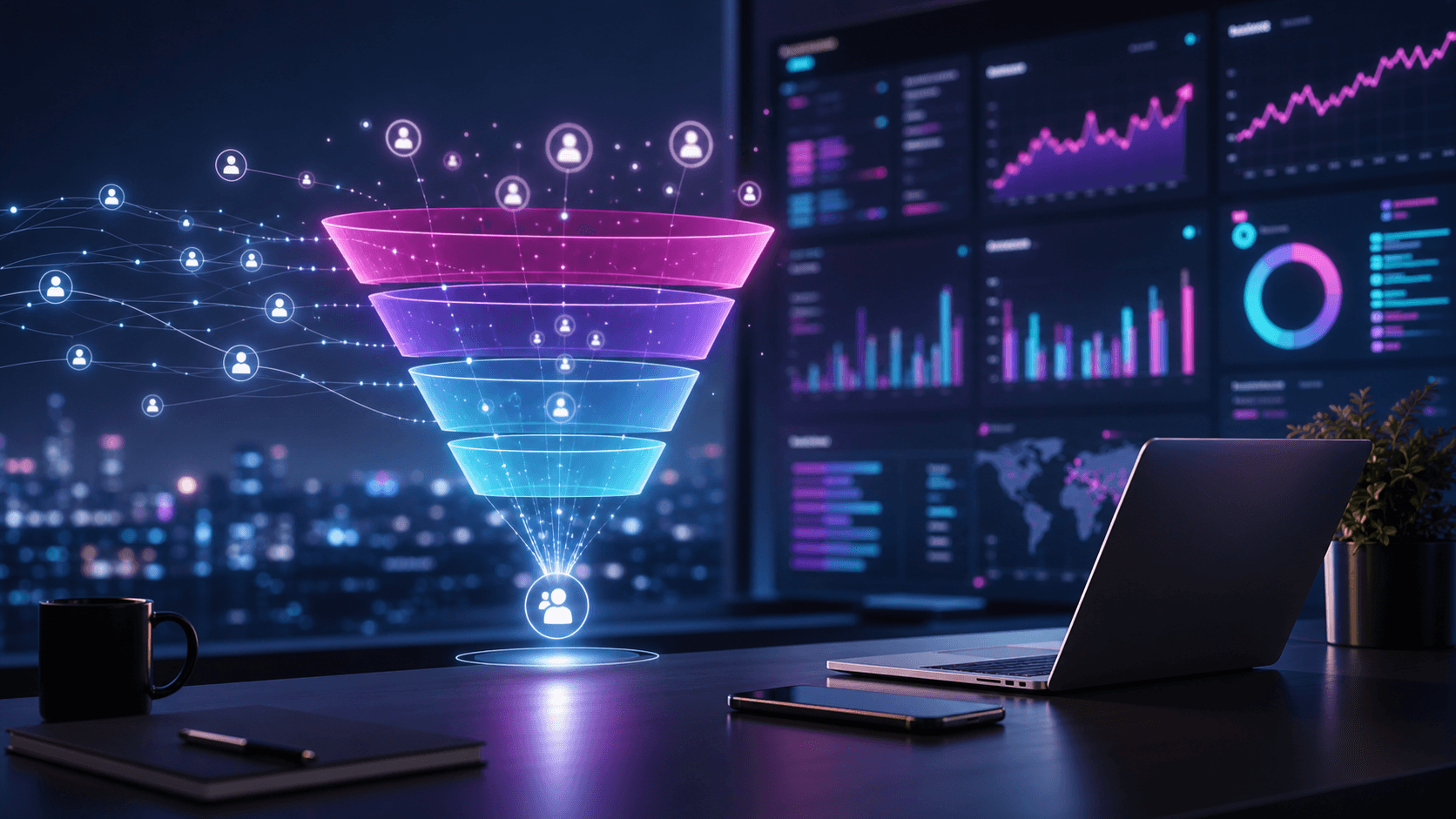
The Five Layers of an AI-Powered Funnel
Layer 1: Intelligent Lead Capture
The funnel starts before the opt-in. AI systems analyze:
- Traffic source and campaign attribution
- On-site behavior (pages visited, time spent, scroll depth)
- Device, location, and firmographic data (for B2B)
- Content consumed and topics engaged with
This behavioral data enriches the lead profile from the first interaction, before any form is filled.
Layer 2: Dynamic Segmentation
Static lists are replaced with dynamic segments that update in real time based on behavior. Examples:
- "Visited pricing page 3+ times in 7 days" → Sales notification + accelerated nurture
- "Downloaded two technical docs" → Route to technical nurture track
- "Opened 0 of last 5 emails" → Suppression + re-engagement campaign
These segments aren't manually built — the AI identifies and creates them based on patterns that correlate with conversion.
Layer 3: AI Content Generation and Personalization
Every email subject line, body copy, and CTA is generated and optimized for each segment. Not from static templates — from AI that understands:
- What language resonates with this audience
- What pain points they've expressed
- What content they've previously engaged with
- Where they are in the buying journey
Layer 4: Predictive Timing and Channel Selection
AI analyzes historical engagement data to determine:
- The optimal day and time to contact each prospect
- Whether email, SMS, or LinkedIn outreach will perform better
- How long to wait between touches
- When a prospect is ready for a sales conversation
Our clients typically see 25-40% improvements in open rates just from AI-optimized send timing.
Layer 5: Continuous Testing and Optimization
Every element of the funnel is continuously A/B tested: subject lines, CTAs, email timing, landing page variants, ad creatives. The AI automatically identifies winners and allocates more traffic to better performers — without waiting for a human to read a report.
The NexusBrand Implementation
NexusBrand was running static Klaviyo flows that converted at 2.1%. Here's what we built:
Capture: Dynamic pop-ups personalized by traffic source and product category viewed Segmentation: 18 dynamic segments based on purchase history, browse behavior, and lifecycle stage Content: AI-generated email variants — 240 unique sequences across all segments — tested in real time Timing: ML model trained on 2 years of engagement data to predict optimal send windows per subscriber Ads: Retargeting campaigns with AI-generated creative matched to each segment's recent behaviorResult: Email conversion rate from 2.1% to 6.8%. ROAS improved from 1.2x to 3.6x. These aren't anomalies — they're what systematic AI optimization produces.
Getting Started
You don't need to rebuild your entire stack to start. The highest-ROI entry points:
1. Email timing optimization — Quickest win, 2-week implementation
2. Dynamic segmentation — Mid-complexity, significant impact
3. AI content generation — Enables scale without headcount
4. Predictive lead scoring — Transforms sales efficiency
Start with one layer, prove ROI, then expand. The compounding effect of a fully AI-optimized funnel is transformational — but it's built brick by brick.